

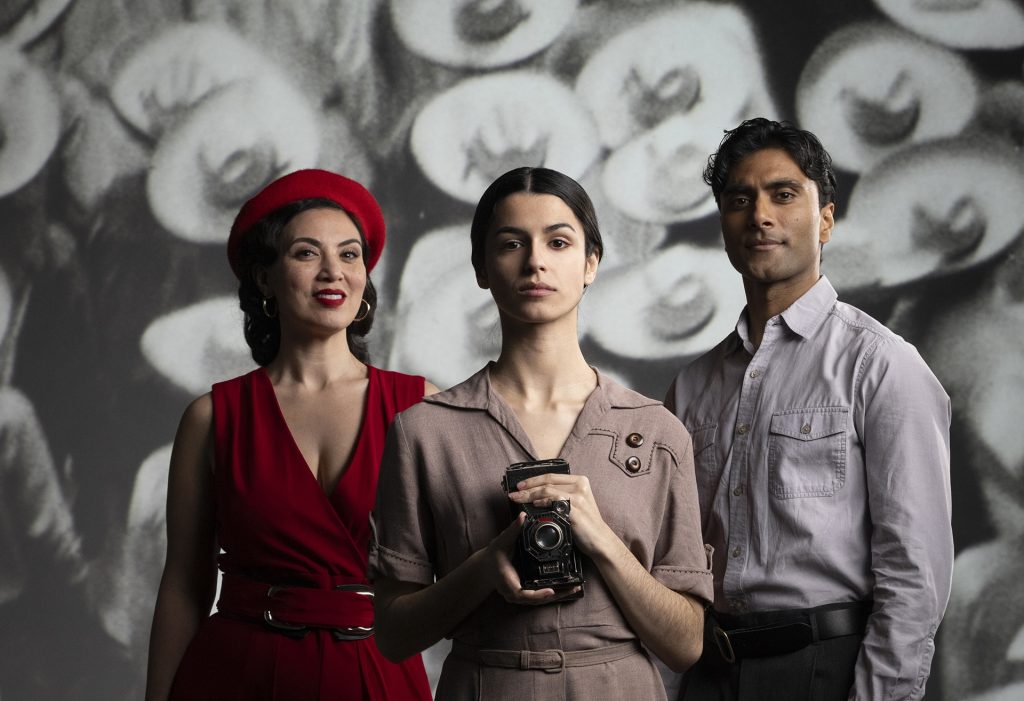
Credit: David Cooper
The Cultch to October 26, 2025
Tickets from $35 at 604-251-1363 or www.thecultch.com
Posted October 20, 2025
The world premiere of a new play is cause for celebration and the opening night audience at Fire Never Dies: The Tina Modotti Project celebrated with an immediate, noisy-bordering-on-raucous, standing O.
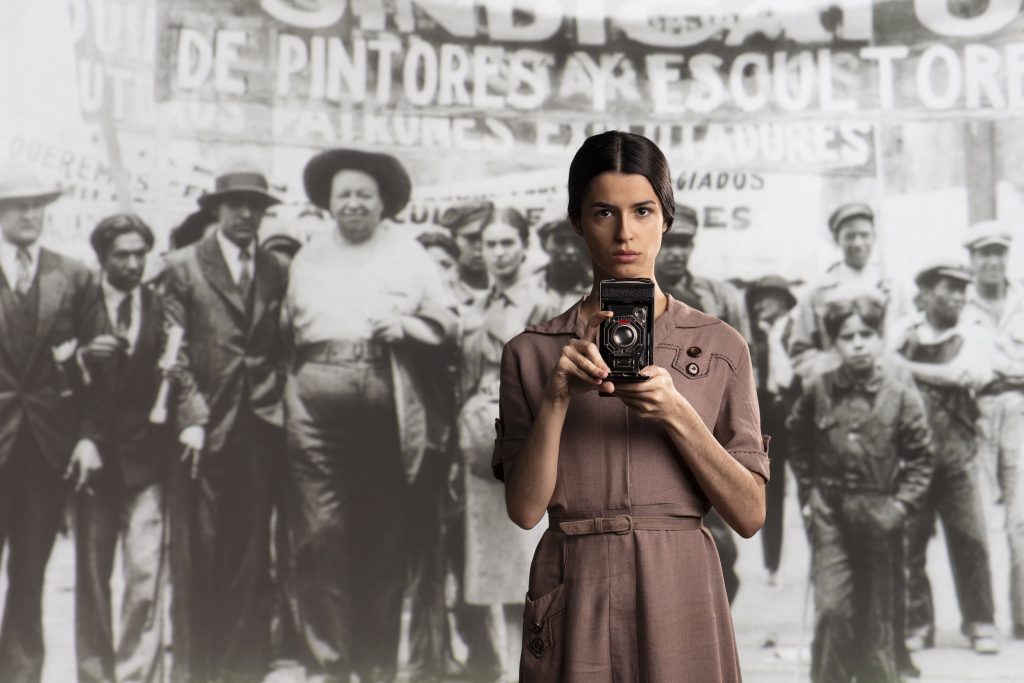
The staging is fantastic: set design by Shizuka Kai features colourful wall-size projections (by Candelario Andrade) of Diego Rivera murals, and huge blowups of b/w Modotti photos as well as b/w photos of some of the play’s characters including Modotti, Rivera, Edward Weston and Frida Kahlo. John Webber’s lighting design is stunning, beginning with a neon-lit frame around the performance area. Costumes by Carmen Alatorre – especially those on Kahlo and a fabulous white lace dress on Modotti – are gorgeous. And from the moment the play begins the Historic Theatre at the Cultch is filled with acoustic guitar and Spanish-language lyrics. The audience is stoked.
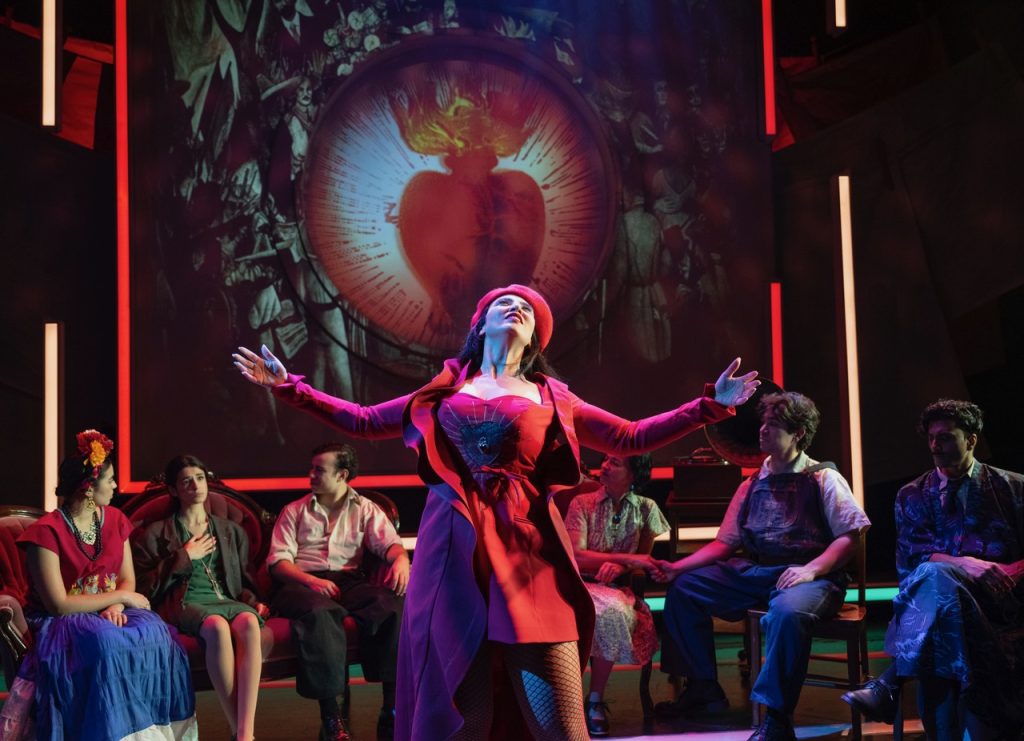
Fire Never Dies is the latest and much-anticipated play by Chilean Canadian playwright Carmen Aguirre whose interest in the Italian American photographer Tina Modotti goes back to the early nineties. Later, in 2009, Aguirre wrote a solo show about Modotti which she shelved and then revisited during Covid. Over the last four years, Electric Company Theatre has worked collaboratively with Aguirre and a dynamic creative team.
Using the life of photographer-turned-revolutionary activist Modotti, Fire Never Dies asks three questions: What is the function of art in the face of fascism; can art serve the poor and if so, how; and what is the personal cost of militancy. Aguirre herself is the child of activists who were part of the Chilean resistance movement. They fled Chile during the Pinochet regime and, “I lived in terror for much of my youth,” Aguirre says.
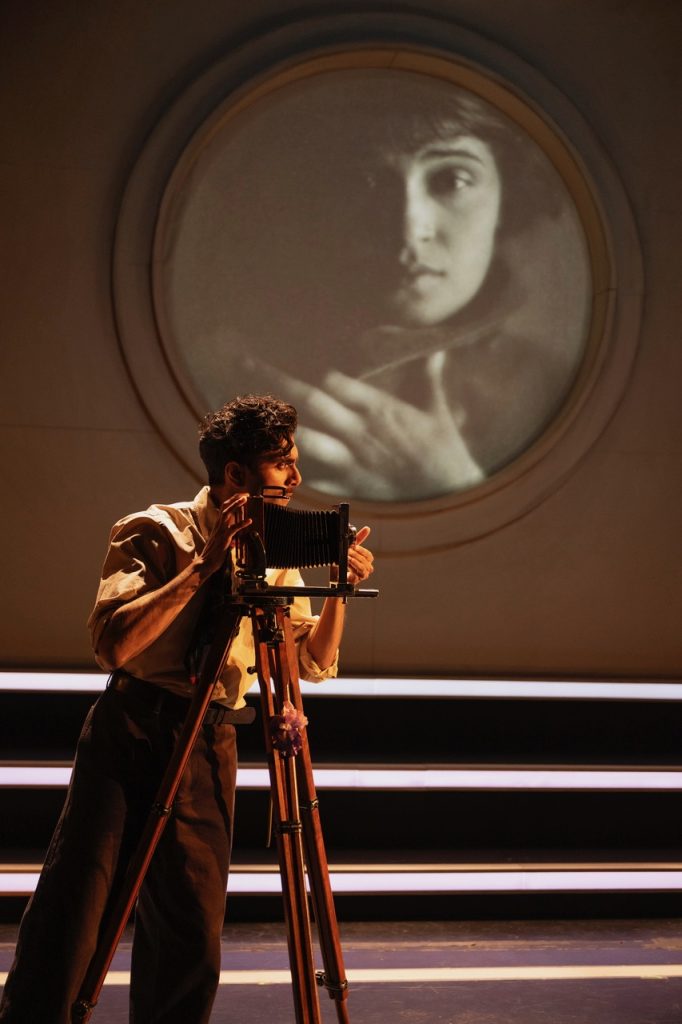
Credit: David Cooper
Action in the play moves back and forth from Italy, where Modotti was born in 1896, to California, Mexico, Moscow, Spain and back to Italy but it begins in Mexico City and Modotti’s death by heart attack in 1942. Time spins back and forth over the years.
Aguirre expressed in a CBC radio interview that there might be some backlash because her central character is a Communist. That, I think, is not a problem; keeping track of time and place sometimes is. There are other problems with Fire Never Dies especially in Act 2 where the ‘episodes’ (of which there are twenty-five) come brief, thick and fast and not always with obvious necessity: 1929; 1929-1936; 1903; 1936-1939;1911;1993;1902; 1942. The focus on Modotti is almost lost in the maelstrom of world events.
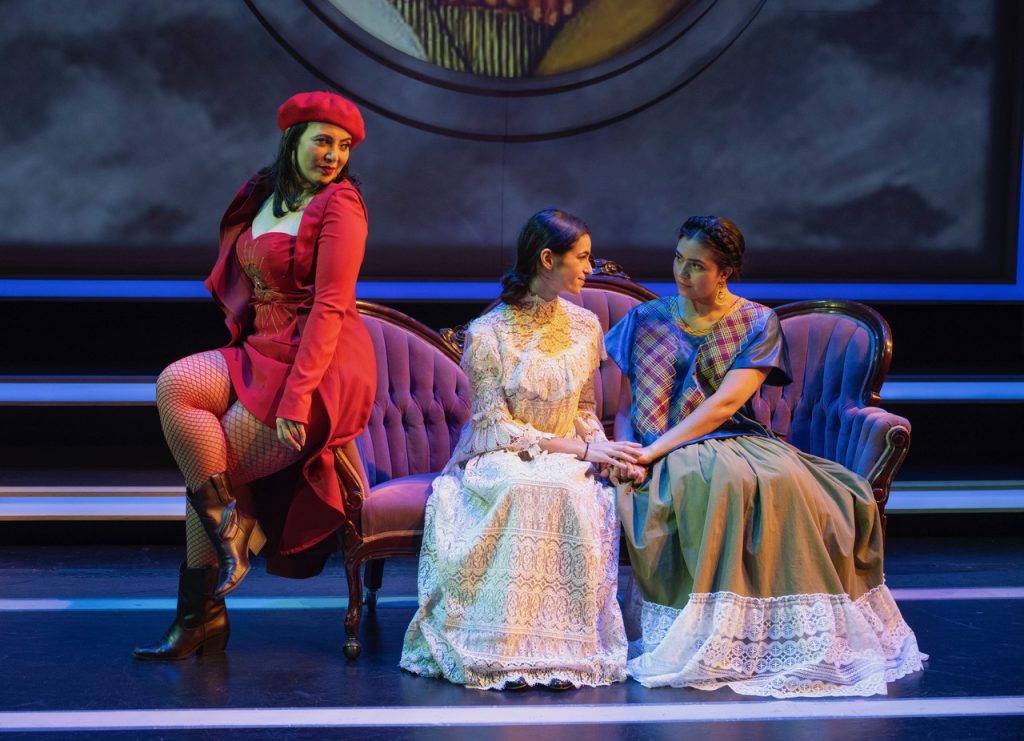
I had some difficulty accepting Modotti’s heart as a ‘shadow’ or ‘ghost’ character throughout. Slim Marianna Zouzoulas, primly costumed by Alatorre, dies at the beginning of the play but immediately engages and questions her ‘heart’ concerning how she, Modotti, has led her life. Has her revolutionary zeal been worth the personal sacrifice – especially her desire for a child. Melissa Oei, clad always in scarlet and black – with lots of cleavage and appearing more whore than heart – is voluptuous and sexy as Modotti’s heart. Both Zouloulas and Oei’s performances are great but the two ‘characters’ did not seem two parts of a whole until the final scene. That merging, however, when it comes, is wonderful.
Focus throughout is mainly on Modotti but Praneet Akilla makes a handsome, sexy Julio; Tasha Faye Evans is Tina’s mother and Lupe Marin; Brian Martinez is both Xavier Guerrero and Vittorio Vidale; Mattheus Severo is Diego Rivera. Outstanding is Ximena Garduño as Frida Kahlo, flamboyantly, ethnically costumed by Alatorre. All but Zouzoulas play several roles.
Credit: David Cooper
Tina Modotti stopped taking photographs while she was a nurse during the Spanish Civil War. She did not photograph the horrors and was criticized by compatriots for failing to document the war. Indeed, she hung up her camera for good and was criticized for doing so.
Questions remain for us and, obviously, for playwright Aguirre: do we have the right to expect artists to sacrifice the personal for the political? And, having made sacrifices, do artists have the power to change anything? Did Nick Ut’s photo of Napalm Girl prevent the brutal bombing of Gaza and Ukraine?
Produced by Electric Company Theatre and presented by The Cultch and Vancouver Latin American Cultural Centre, Fire Never Dies: The Tina Modotti Project is colourful, handsome and sweepingly epic – a kaleidoscopic world premiere well worth celebrating.