

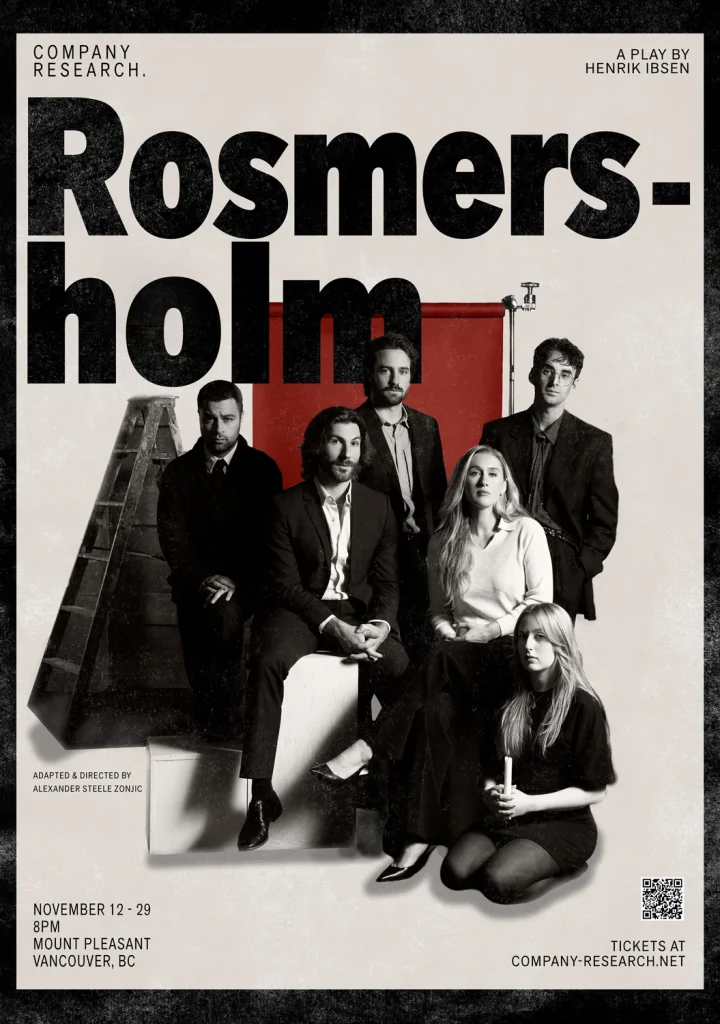
Mount Pleasant. Exact location revealed when tickets are purchased. Two flights of stairs; no elevator. November 12-29 and December 3- 6, 2026
Tickets $37.50 at www.company-research.net. Mostly sold out but a limited number of tickets are available December 5 and 6, 2026 or waitlisted
Posted November 27, 2026
There’s a new kid in town. Well, not a new kid but a new theatre company – Company Research – and Vancouver is in for a tsunami of fresh, exciting, innovative theatre.
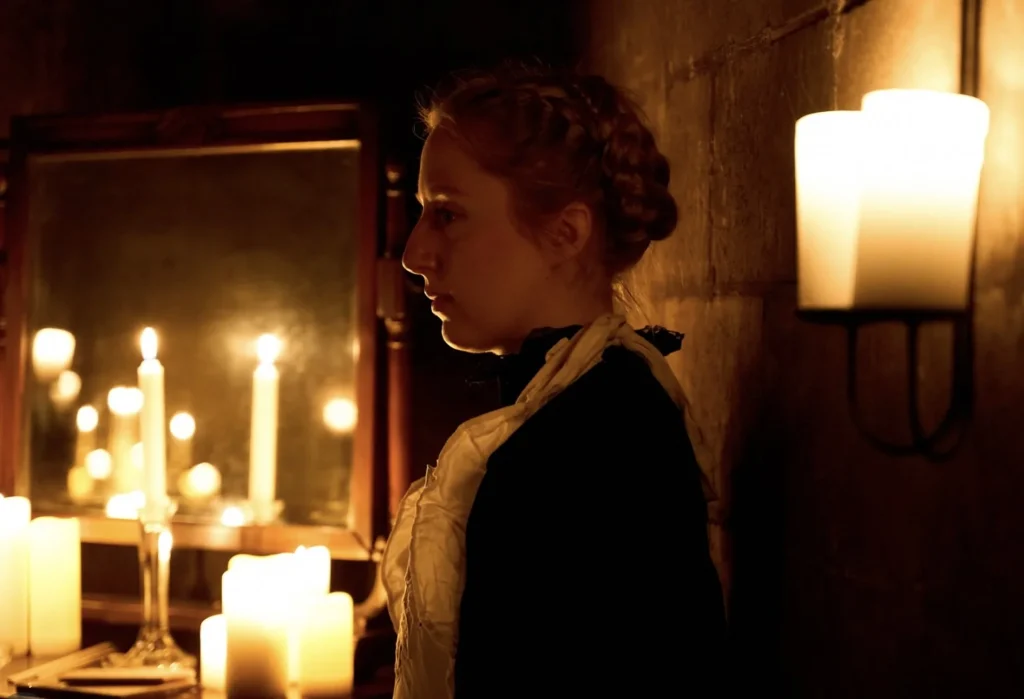
Under the direction of Alexander Steele Zonjic, the company’s inaugural production – Henrik Ibsen’s Rosmersholm – bodes well for theatregoers in this town. Staged in a warehouse and entirely candlelit, an immediate environment is created. Old world. Old money. Old ideas. The audience, accompanied by one of the characters, is ushered into the shadowy space two or three at a time and seated around the periphery of the performance area. Centre ‘stage’ is an elegant, polished dining table alight with candles; candle-lit sconces are mounted along the walls. It feels, somehow, like a church or a sacred place, and before the play begins, the audience speaks in whispers or not at all. Theatre, as a kind of communion, I have seldom felt so strongly.
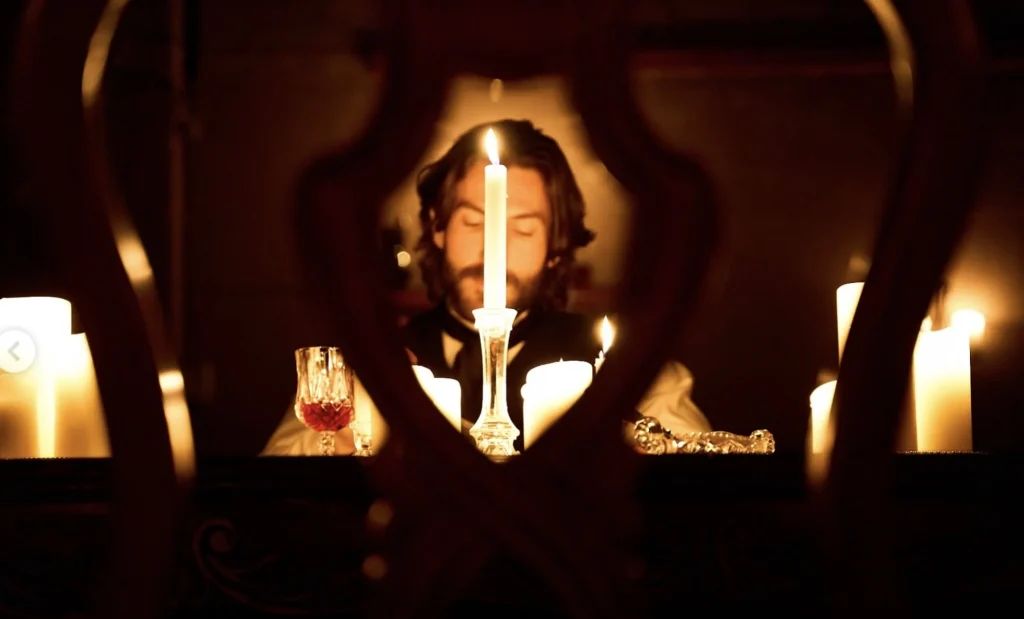
It’s 1886. Norway is on the cusp of change, of struggling to throw off old ideas and embracing a bright, new future. But Ibsen’s characters are mired in the past. John Rosmer, recently widowed after the suicide of his wife Beata, is the inheritor of the Rosmer reputation, a name that has for generations been held in high regard in his town. A former pastor, he has recently left the church, partly at the urging of Rebecca West, a guest in his home – Rosmersholm – for some time.
New ideas are emerging and factions are vying for Rosmer’s name and reputation to advance their position. Ultra-conservative Theodor Kroll, Beata’s brother, vehemently argues for hanging on to old values, most of which are rooted in the church. Peter Mortensgaard, newspaper publisher and spear head of change in the community, needs the Rosmer name to add legitimacy to his cause. Ulrik Brendel, a down-on-his-luck old friend of Rosmer, also argues for change but has neither the means nor the will to work for it.
Cesare Scarpone’s Rosmer is a gentle, bewildered, easily manipulated man at the mercy of Spencer Lord’s, outspoken, angry Theodor Kroll, a school headmaster. Peter Mortensgaard, portrayed by Elijah Silva, is coldly calculating – as manipulative as Kroll but utterly cool and composed – almost reptilian. Nathan Kay, as Ulrik Brendel, is a staggering, lost soul who eventually comes to think change is not possible. Those are Ibsen’s three poles: stay with old, fight for the new, or despair. Siona Gareau-Brennan plays Rebecca in a much more strident, sometimes, taunting, overtly sexual manner than I have previously seen. In her ‘housecoat scene’, for example, Gareau-Brennan appears in a body-hugging, naked-shouldered attire that, obviously, shocks Kroll and causes him to cover his eyes. In this Zonjic take on the play, Rebecca moves from background to foreground, ultimately eclipsing Rosmer: an interesting, sort of New Woman choice. Reece Braaten is Miss Helseth, Rosmersholm’s housekeeper who has the uncanny habit of turning up when it’s least opportune.
Zonjic has very freely adapted Ibsen’s play and that’s a good thing; I recently re-read the play and found it excruciatingly heavy-handed and the character of Rosmer naïve in the extreme. That a man would think he could singlehandedly “ennoble mankind” just seems ridiculous. It’s still a very argument-filled play with Rosmer, Kroll, Mortensgaard, Brendel and eventually Rebecca going on at length about freedom and change without any obvious plan as to how freedom and change are going to be achieved.
But the production and the performances are fantastic. The candlelit setting is gorgeous; the ringing of the little bell and the singing – more like praying – by several maids in black gowns are highly evocative; and the introduction of Beata’s ghost is inspired. We are immersed in late 19th century Norway with it’s rigid morals. We feel the wintery weather over the fjord without a word being mentioned. Guilt and shame hang heavy in the air. We are there, in Norway, in 1886. Magic.
Next up for Alexander Steele Zonjic is, likely, a Chekhov play. With Rosmersholm, he and Company Research are already bringing excitement to the theatre; lineups outside the warehouse/theatre. Sold out houses. Young, energetic and with impressive credentials, Zonjic – alternating between here and New York City – is one to watch.